Publications
September 25, 2007
In the 2004 tax year, tax filers claimed almost $40 billion through the Earned Income Tax Credit (EITC), making the EITC one of the largest federal programs that provides cash supports to low-income working families in the United States. The EITC is especially important to rural families throughout the United States. Among poor and near-poor families, those in rural areas are more likely to be…
September 24, 2007
As men's jobs in traditional rural industries, such as agriculture, natural resource extraction, and manufacturing disappear due to restructuring of rural labor markets, the survival of the family increasingly depends on women's waged labor. Rural mothers with children under age 6 have higher employment rates than their urban counterparts but have higher poverty rates, lower wages, and…
September 17, 2007
Rural America in the twenty-first century must develop new relationships and new ways of doing things to ensure an economically prosperous, socially just, and environmentally healthy future. Tapping into the resourcefulness and creativity of rural people will be essential in addressing this challenge. However, they cannot do it alone. Rural communities need critical infrastructure, investment,…
September 6, 2007
New Hampshire prides itself on its first-in-the-nation status, but with changing demographics and significant migration in and out of the state, the winner of the New Hampshire Primary was anyone's guess.
August 28, 2007
When the nation goes to war, all Americans are expected to make sacrifices. Today's rural Americans, however, have fewer job opportunities within their communities, and are joining the military at higher rates. In turn, rural communities are facing military losses in disproportionate numbers to their urban counterparts.
August 28, 2007
On August 28, 2007, new data from the U.S. Census Bureau's American Community Survey show that 22 percent of rural children are living in poverty, up from 19 percent in 2000. On average, rates are highest in the nonmetropolitan South (27 percent) and have climbed the most in the nonmetropolitan Midwest (by 3.9 percentage points).
July 1, 2007
The Food Stamp and the National School Lunch Programs play a vital role in helping poor, rural Americans obtain a more nutritious diet and alleviate food insecurity and hunger. This fact sheet looks at the extent to which rural America depends on these programs and describes characteristics of beneficiaries of these federal nutrition assistance programs.
June 6, 2007
The large-scale movement of women into the paid labor market has brought sweeping change into family life and also in who cares for the elderly and children. This brief studies workers in two low wage, predominantly female care-giving occupations plagued with high turnover direct care workers and child care workers. It provides a better understanding of how they fare when compared with other…
May 10, 2007
Despite a flurry of reports on health insurance coverage for children, virtually none of them have examined the unique situation of rural families where one-fifth of all the nation's poor children live. This brief takes an in-depth look at the health insurance programs, such as SCHIP and Medicaid, which rural children rely on for medical care.
April 1, 2007
Income inequality in New England is rising at the highest rate in the nation, this brief finds. Between 1989 and 2004, the region experienced the largest increase in income inequality in the country, due to both growth among top earners and the hollowing out of the middle class caused by significant changes in the nation's economy.
March 20, 2007
New Hampshire has been successful in achieving one of the lowest uninsurance rates for children in the country - 6 percent in 2005 (U.S. Census Bureau). The extent to which New Hampshire Healthy Kids has contributed to the state's success in achieving this low rate is the focus of this brief.
January 1, 2007
Biofuels play a crucial role in America's quest for oil independence. In recent years, the biofuel industry has seen significant technology and efficiency advances, as well as expansions in the materials that can be used to create biofuels. Grains and oilseeds are limited in their ability to meet fuel needs, but a shift to biomass feedstocks offers better production possibilities. For rural…
January 1, 2007
While members of the U.S. Senate considered the first increase in minimum wage in a decade, the Carsey Institute released findings of a study showing that it would benefit rural, low-wage workers every bit as much, if not more, than workers in big cities.
December 20, 2006
New Hampshire boasts the nation's lowest percentage of people living in poverty and maintains strong national rankings in other quality-of-life measures. But 48,000 New Hampshire families with low incomes struggle to make ends meet, this issue brief finds. The brief identifies characteristics that heighten families' risk of a lower income and documents recent trends in the economic…
November 28, 2006
Regions of rural America are being reshaped by growing numbers of immigrants who are choosing small-town life over the bright lights of the big city. This study found that immigrant settlers may have a big impact on small, rural communities—sometimes straining resources but also offering promise for reinvigorating dying communities.
November 9, 2006
A study by the Carsey Institute found that among U.S. soldiers serving in Iraq and Afghanistan, those who are from rural America are dying at a higher rate than those soldiers who are from cities and suburbs. According to U.S. Department of Defense records, rural youth enlist in the military at a higher rate than urban and suburban youth and in all but eight states, soldiers from rural areas make…
October 3, 2006
This brief examines predatory mortgage loans and the harmful impact they have on rural homeowners and their communities. The report finds that minorities and low-income people are more likely to fall victim to higher-cost loans. The brief includes recommendations for policy changes at the state and federal levels, as well as advice on identifying and avoiding predatory loans.
October 1, 2006
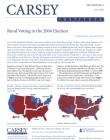
Rural votes can often make the difference between what party controls Congress and who is living at 1600 Pennsylvania Avenue. This Carsey fact sheet presents detailed patterns of rural voting by region and shows that these patterns are better explained by looking at demographic factors rather than simply by where people live.
October 1, 2006
While New Hampshire has the highest labor force participation (71 percent) and the second-lowest unemployment and underemployment rates in New England, recent trends in employment and wages point to growing disparities in the state, this issue brief finds. The brief provides a state-focused analysis of the Economic Policy Institute's national report, “The State of Working America 2005/2006.”
October 1, 2006
The rural vote is critical, but how do rural voters' views on issues such as abortion, same-sex marriage, and religion influence elections? This brief compares rural and urban views on these divisive issues and examines how much rural opinions vary within rural regions of the country.
