Rooted in Place: Expanding Environmental Education Across New Hampshire

How do we build a more environmentally literate New Hampshire?
In 2025, New Hampshire Environmental Educators in partnership with UNH's Carsey School of Public Policy launched the first major update to the New Hampshire Environmental Literacy Plan (NH ELP) since 2016. Shaped by voices from across the state—including educators, nonprofits, state agencies, and community members—the updated plan offers a roadmap for expanding environmental learning opportunities for people of all ages.
In this Carsey Policy Hour, members of the NH ELP Committee and New Hampshire Listens discussed the statewide engagement process and the strategies that will guide environmental learning across New Hampshire.
Watch the Video
View the Presentation
Access the slide presentation.
About the Speakers

Dr. Carrie Portrie
Research Assistant Professor & Associate Director, NH Listens, Carsey School of Public Policy, UNH
Dr. Carrie Portrie is a Research Assistant Professor and Associate Director of New Hampshire Listens at the UNH Carsey School of Public Policy. Her background spans cultural anthropology, inclusive education, and community-engaged research. She holds a bachelor's degree in anthropology and sociology from Roger Williams University, a master's degree in early childhood special education from UNH, and a PhD in Education with a focus on Children and Youth in Communities from UNH. Her work with NH Listens centers on designing participatory processes and grounding community engagement in inclusive, equitable practices. She played a key role in facilitating the stakeholder engagement process that shaped the updated NH Environmental Literacy Plan.
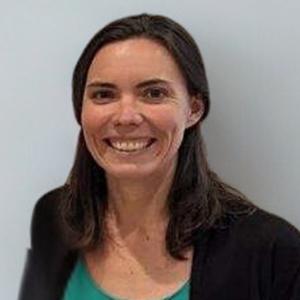
Dr. Maddie Smith
Research Scientist, Earth Sciences Research Center, Research and Engagement Fellow, NH Listens, Carsey School of Public Policy, UNH
Dr. Madeleine Smith is an interdisciplinary Research Scientist at the Earth Sciences Research Center and Research and Engagement Fellow with NH Listens at the UNH Carsey School of Public Policy. Maddie is a systems thinker and applied researcher with over a decade of experience connecting data, policy, and place to build more resilient communities and outdoor spaces. She holds a master’s degree in Outdoor Education and PhD in Natural Resources Environmental Studies from UNH, where her dissertation examined the impacts of climate change upon outdoor recreation in New Hampshire. At NH Listens, she has contributed to the forthcoming New Hampshire Comprehensive Climate Action Plan. Maddie served on the NH ELP Committee and contributed to the statewide engagement process and writing of the updated plan.
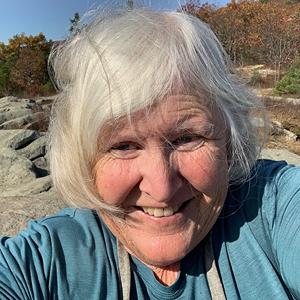
Dr. Judy Silverberg
Development Chair, New Hampshire Environmental Educators Board of Directors
Dr. Judy Silverberg has worked for over forty-five years in environmental education in Wisconsin, Connecticut, and New Hampshire—twenty-eight of those years as Wildlife Education Programs Supervisor for NH Fish and Game. She also served as the NH Project Learning Tree Coordinator. Judy holds a bachelor's degree in Wildlife Ecology and a master's degree in Environmental Education from the University of Wisconsin, and a PhD in Natural Resources and Human Dimensions from UNH. She is a naturalist, author, and educational consultant who has taught students, teachers, and college students about the natural world and science process skills. Her awards include the Howard I. Wagner Award for Excellence in Science Education and the John Pearce Memorial Award from the Northeast Section of the Wildlife Society.
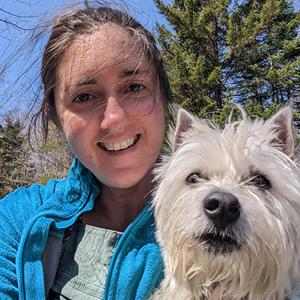
Leigh Ann Reynolds
Administrator, New Hampshire Environmental Educators
Leigh Ann Reynolds is the Administrator of New Hampshire Environmental Educators (NHEE), serving as the organization's first-ever paid staff member since 2023. In her role, she manages day-to-day operations and supports the organization's mission to inspire connection to the natural world through high-quality environmental education and advancing environmental literacy. Leigh Ann holds a bachelor’s degree in wildlife biology with a minor in Wilderness Studies from the University of Montana and a master’s degree in Education specializing in Science and Environmental Education from Antioch University New England. She has been a visible leader in building NHEE's capacity to serve educators and communities across New Hampshire, including through the NHEE to Get Outside Grant program.
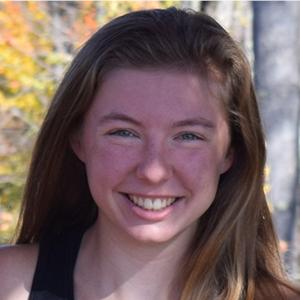
Kayla Stoll
NH ELP Committee Member; Environmental Science Student & Advocate
Kayla Stoll is a Bedford, NH, native and student at Southern New Hampshire University pursuing dual degrees in environmental science and environmental engineering. A passionate environmental educator and public speaker, she gave a TEDx talk on environmental education through TEDxSNHU in early 2025, advocating for environmental science to be mandated as a core subject in schools. Her commitment to environmental stewardship began at Joppa Hill Educational Farm, where she worked with community gardeners and taught students from diverse backgrounds. Kayla served on the NH ELP Committee, contributing a youth perspective to the plan's development.
How will communities across the state find their way to the plan?
(Judy) We hope that by doing things like this, people who listen will get online and be able to look at the plan. We are still meeting with various folks in positions where they can help us implement and get the word out about the plan, so that work will be ongoing in the next couple of months.
We are trying to get many of our partners or organizations to actually identify what they are doing. We just had our conference in the Keene area, and I learned that one of the many organizations, like the Harris Center for Conservation Education, is in every school in the Con-Val district. A lot of people don't realize that, but there are huge amounts of work going on currently about environmental literacy that people aren't connected with.
The New Hampshire Environmental Educators also have a grant program called The NHEEd to Get Outside Grant, where we provide small grants to schools and organizations to help them take groups of students and adults out into the community to experience it. As we know, when we talk about education and the environment, it's really about building a group of people who care about where they are and want to see that continue. They have to engage in order to make sure that in ten, twenty years from now, those places still exist.
Did anything stick out as surprising, or did you hear recurring themes throughout the process?
(Carrie) One thing for me, and Leigh Ann and Kayla emphasized this in their pieces, is that environmental literacy really shows up in a ton of spaces. Sometimes people can hear environmental or words associated with environmental literacy and think, well, that's like a partisan thing, and that's something that only this group thinks about. But what this plan shows and what the participation shows, like examples of drinking water, air, health, public health, and healthy ecosystems—that's all wrapped into environmental literacy.
The more we hear those stories, the better, because it isn't one side or another; it impacts the hunting community, fishing, and all the different ways people use trails. It's really great to see Governor Ayotte supporting the work and seeing it filter back into the state conversation, because, as Judy mentioned, it shifted in the last decade or so; it's nice to see that this is coming back into the center.
One thing that stood out to me, and was reiterated by Maddie when we talked about the second draft of the plan, is that it was really important that people didn't see it as the environmental educators' job; Leigh Ann is the first employee and staff member, Judy's leading through volunteerism, and Kayla's volunteering. So, it's about having a plan that doesn't say, well, New Hampshire Environmental Educators, you need to show that you've done this. The more we can use that framing of, how can we get together? How can we use the plan to develop a curriculum? How can we use the plan to make a change? The layers are numerous; those are things that I just keep holding as really, really important in this process and during this time.
(Judy) One of the things I think about the plan that was important is that we had a terrific committee and commitment from New Hampshire Environmental Educators and beyond. We actually had a couple of people on the committee who were not NHEE members; that brought a whole different perspective and viewpoint. This plan, I want to emphasize, was not the work of just a few people, and we were lucky that we had such a thoughtful committee to begin with. They are the ones that did the work; the thinking work, the hard work, the critical thinking work, and always paid attention.
We had set some parameters up, and they paid attention to the language, the inclusivity, and the diversity we wanted to see. This was a committee effort, and without New Hampshire Listens, it would not be the plan it is. We did it in nine months, which for a statewide plan is almost unheard of.
Did you encounter any disagreements or resistance during this process?
(Judy) Whenever you bring a lot of people together, there's always a lot of different viewpoints, and that was really one of our goals. We didn't want the same voices at the table; we wanted to make sure that we had a broad range of voices at the table.
When you talk about the environment, it's very easy for people to line up on a different side, yet when we all get down to it, it's all about our connection to the land and that love of connection to the outdoors and environment. That can help bring us together and see that we are really not all that different. A mountain biker and a hunter, why are they there? Because they love the activity that they are involved in, and they love the outdoors, and have that connection. It's always reminding us back to, what is the root of our commonality?
That is super important, and people may not agree. Whether it's extreme weather events, climate change, or if it's just random, it's okay. All they know is that there's some change happening and they don't like it, and that's what can bring us together. People disagree in terms of their particular activity, or their particular love of where it fits in the hierarchy of things, but ultimately, it's about that connection to the land.

