Want Effective Bipartisan Solutions? Elect More Women
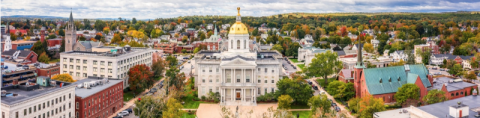
Regardless of party, when women serve, they are more likely to support policies that benefit women and girls in their community and they are more likely to seek bipartisanship and find compromise. New Hampshire’s highest elected positions are dominated by women, yet women represent only 36% of the New Hampshire legislature and 39% of New Hampshire towns have zero women on their Select Board. In this Carsey Policy Hour, Devan Quinn, Director of Policy at the New Hampshire Women’s Foundation, discussed why we need more women in local office, the barriers women face in running, and recent examples of women’s leadership in passing state legislation that benefit women and girls across issues like maternal health, access to menstrual products, and girls’ mental health.
Watch the Video
View the Presentation
Want Effective Bipartisan Solutions? Elect More Women
About the Speaker
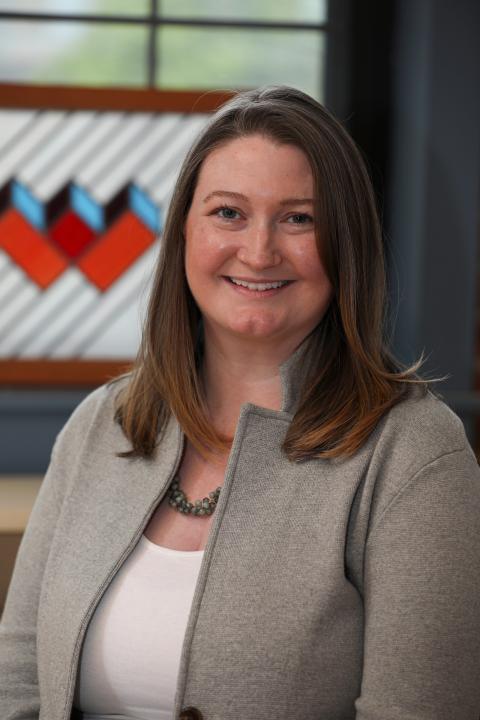
Devan Quinn is the Director of Policy at the New Hampshire Women’s Foundation, overseeing research, policy, and advocacy programs. Devan leads the Women Run program, the Granite State’s only nonpartisan program encouraging and training women to run for state and local office. She lobbies at the state house on legislation impacting maternal health, abortion access, child care, menstrual product access, trans rights, and girls’ mental health. Devan manages the organization’s flagship publications, The Status of Women and The Status of Girls in New Hampshire. Prior to the Women’s Foundation, Devan worked in politics, advocacy, government, and program implementation. A New Hampshire native, Devan lives in Portsmouth with her husband and their two young boys.
Why don't you think there are any women mayors in New Hampshire, or many on the select board?
It's not that they aren't getting elected, and it's not that people don't vote for them. We did have four women running for mayor, and it didn't work out, but we have a lot more than four cities. We had two, three, four men running for city mayor in many towns, so of course, a man was going to win there. If you only have four women versus two men running in every city, of course, that percentage is going to be lower.
That goes back to women not seeing themselves or being encouraged to run for executive-level positions. That goes back to a civilization where women should be working in spaces with children and school boards. Yes, that is wonderful; women should be in school boards, and they should also be at executive-level decision-making and leadership positions too. So, we can change that.
Are there different structural barriers at the mayor's level than at other levels of government?
You certainly don't need to have served in any certain position before you run for mayor or selectboard. A lot of times, people who run for mayor have served on the city council or as an alderman. So, if we don't have enough women running for city council or alderman, then it's less likely we are going to see women running for mayor.
It doesn't have to happen that way; Jessica Spiers ran for mayor of Manchester, and she was a school board member, and I loved that. That is a traditional path, so we do need people in that pipeline, and that goes not just for within your town, but beyond that. I'm worried we don't have this pipeline of women running from the school board, to the select board, to mayor, to state representative, to state senate, to governor, to senate.
How does New Hampshire compare to other parts of New England or the country?
New Hampshire is doing great at the federal level compared to other states. For the state house level, we are probably in the middle of the pack for New England. Some New England states are better, and some are worse for women's representation.
At the municipal level, I really just don't have that data. It's something that we struggle with and something that the Women's Foundation has really prioritized, because there's no other place to gather the gender data of municipal representation. We go to every single town, we pull up all of these things, we call the city clerk, and we send emails asking. Some towns have great websites, and some don't have that information on their websites.
It's a labor of love to find out the percentage of our municipal representations are. When I said that 39% of towns have zero women on their select board, that took hours and months and days of staff time to figure out that piece of information, but it's so important, and that's why we do it. No other states that I know are collecting municipal data based on gender like that. I would like to see a standardization of collecting gender.
At the state house level, there is a button, and you can pull up the spreadsheet of all elected representatives and their gender. I think it is wrong; there are a couple of gender identities that are wrong, so you have to adjust for that error. But on the whole, it is great for not just me as a researcher to put that out there—anyone can pull that information.
There have been two times where the Senate reached parity, parity being at least 50% or more of women in the Senate. Last election, there was 50/50, but the state house has never reached parity. There are many reasons; there's a party differential. I'm not advocating any party aspects to this, but the facts are that Democrats do send more women, but not exactly 50%, and there are many fewer as a percentage of Republican women. So, I'm always saying we are never going to reach parity in the state house unless we see more Republican women running.
Do you think the cost of running has any correlation to women running?
Of course, when you are looking at the higher-level offices, we always hear about the millions of dollars running for Senate, or governor, or things like that. When you get down to the state senate, that's still expensive. The state house does cost something at the local level, but it is less costly. The more local levels, the less costly it is. There are people I know who put their name on that ballot and did absolutely no campaigning at all, and their town is so small that everyone knows each other anyway. There's no need to put a sign in your yard about what your name is because everyone knows you.
But the point of the question is absolutely taken—money is a big part of it. When we talk about having diversity of voices at the table at all levels, it can't be people with wealth or enough wealth to buy their own signs and take a day off to go knock on doors to voters. We've talked about it a lot in different areas at the state house; of course, that is paid $200 and is a pretty full-time position for six months of the year, so who can do that? Not working-class people who need to be at their job every day, or people with low incomes.
That is very much part of the conversation, particularly with women as well. We are coming up on equal pay day; women make less than men, have more responsibilities for childcare, and the time needed for it, so that is definitely part of it.
Can you talk about the intersection of gender with age, ethnicity, and education level?
I talked about the lack of data we have at the municipal level and how much effort it takes just to find out about gender. We don't have that level of detail for race and ethnicity or age; that would require a survey. That's not something we could find out by asking clerks at the town hall; that's something we'd want people to be able to self-identify with.
With that self-identification, there are efforts to try to know how many LGBTQ+ representatives there are at the local level, but that would really come down to a survey. These are really crucial, important things that we need to know, which is really hard without a survey that people absolutely fill out, and that, of course, would be voluntary.
I know that Dante Scala has looked into this, and at the state house level, it's been really interesting to see his research. It goes with the idea that you can't fix a problem that you don't know about. We can't talk about increasing diversity unless we have those numbers. I could say we need more women in office if I didn't have the number, but it's nice to say that 39% of towns don't have any women on their select board, which encourages that urgency. We shouldn't let a lack of data keep us from taking action.
Are there other policy areas in New Hampshire where increased representation of women has had notable effects?
At The Women's Foundation, we recently put out a brief on girls' mental health, and that girls are more likely than boys to experience anxiety and depression. They are more likely to consider suicide, but girls are more likely to seek help. There was a bill, I think this was Senator Ward, a Republican woman in the Senate, who put out a bill to have the mental health hotline on all school ID cards, which was fantastic. I testified, saying this is great for all youth, and it's particularly helpful for girls because girls experience poor mental health at greater rates, and they're more likely to call a number or text a help line.
Later, we saw another bill that had the eating disorder hotline on school IDs, and that was an interesting way to see how legislation and policy is impacting people based on gender. They said, why this one? Of all hotlines considered to put on an ID, why this one? We had that conversation about how girls are more likely to experience this and are more likely to actually use the number if they see it. That was a great conversation at the state house, where there was a lot of bipartisan support for youth mental health, and it was a very welcome conversation about how that was going to impact girls in particular.
Are caregiving responsibilities a stronger reason for women's lack of participation?
First of all, the caregiving responsibilities—this cannot be understated that women take on a higher share of caregiving in their homes in heterosexual relationships for sure. Men are starting to take on more caregiving, but women are taking on even more, so the discrepancy is huge, and that is 100% part of so many things. Every single topic that I would come to the Carsey Policy Hour within—career, mental health, all these things—is related to people running for office.
We said that women point to their other responsibilities in career and family as reasons why they can't. Often, I hear women saying, well I have to put dinner on the table for my kids every night, who's going to watch the kids? Sometimes, they have husbands at home, and that is the obvious answer, and sometimes women don't have support at home. There are a lot more single moms and single dads, so that's a real part of that conversation as well. Men have this great opportunity to step up and encourage the women in their lives by saying what can I take off your plate so you can put this on your plate? It's a much larger social shift that we need to allow women to engage in a public sphere more by acknowledging and rectifying the huge disparity in caregiving at home and home responsibilities.
Is there a discussion on why women tend to be associated with more bipartisan outcomes?
There is literature, and I am happy to follow up with you. Most of that research is at the federal level on bipartisanship, and it did show that women are more likely to vote in a more bipartisan way. But I really feel strongly that there is more hyper-partisanship at the federal level and at the state level. Not at the local level because most towns are nonpartisan, which is a huge opportunity for women to get involved, because women often don't identify with a party. A lot of times they come to us and they say, well I'm not really a Democrat, I'm not really a Republican, I just really care about my community. There's no better way to engage women than at the local level because they are nonpartisan elections, which really speaks volumes about women's participation in a political sphere and about their non-partisanship. If they initially don't see themselves as partisan people, they are more likely to work with people of all different perspectives.
I think it's even more crucial than their votes—it's who they are sponsoring and co-sponsoring legislation with and how they are making sure legislation comes through the legislative process as non-partisan. It's not quite about crossing lines in partisanship; it's about women's leadership and making sure things are nonpartisan, because we hear so much about hyper-partisan fights at the state and federal level, but so much work is done. Ask any legislator—the majority of the things they vote on are things that everyone agrees on. They're making lives better; we don't hear about those bills that come through that are no-brainers and are unanimous votes. Women are really good at making sure that their priorities to support women and girls are non-partisan from the get-go. I think that is a unique skill that women often bring to their service.

