What is in the One Big Beautiful Bill Act? Select Provisions

Deborah Fournier, Director of Health Law and Policy at the Institute for Health Policy and Practice at UNH, discussed the One Big Beautiful Bill Act passed by Congress over the summer. She covered provisions of the law and the implications of new policies on taxes, health access, and food supports.
Watch the Video
Access the Presentation
Deborah Fournier's Slide Presentation on Select Provisions of the Reconciliation Law or OBBBA
About the Speaker
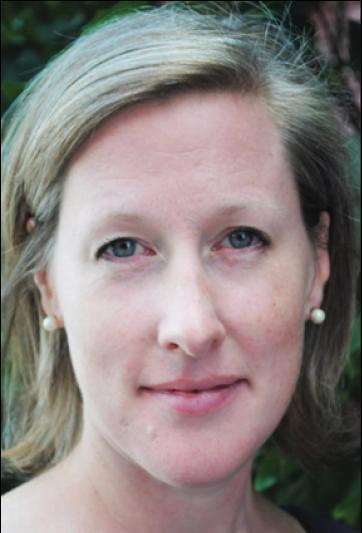
Deborah Fournier, JD, has twenty years of health policy experience, including posts at national organizations such as the Association of State and Territorial Health Officials (ASTHO) and the National Academy for State Health Policy (NASHP). Ms. Fournier has also served in two state Medicaid programs, culminating in her serving as NH’s Medicaid Director. Ms. Fournier’s career has encompassed health policy related to public health crises, healthcare financing, payment reform, health insurance coverage programs, social drivers of health, and Medicaid. She is currently focused on healthcare affordability and emerging pathways for sustainably financing healthcare services and public health services.
Will constraints on states limit innovation in Medicaid programs?
I think difficult environments always create opportunity. I do think it will provide some opportunities for innovation, and the financial pressure that's going to be put on the state program because of the changes to how it may finance it, the nonfederal share, and the limitations it's going to put on additional payments, will eventually cause the state to find some innovation to allow it to continue the program as it currently is.
There are a lot of new requirements and limitations, and I think there's the possibility that difficult environments create opportunity, but there is an equal measure of financial pressure that is going to be applied to this program—not instantaneously, but 2027 and 2028 may be really difficult years for any Medicaid program, including the one in New Hampshire.
How might Medicaid changes impact hospitals and clinical opportunities?
I think hospitals will face increasing pressure around uncompensated care. They will have to continue to provide services to people who come to them, but they will face increasing financial limitations in order to participate in Medicaid.
Frustration in enrollment subjects them to increased uncompensated care, in addition to limitations on provider payments, because folks may not be able to comply with program requirements, but they will still get sick and seek care. This is especially true in emergencies.
If someone was disenrolled from Medicaid because of work requirements, they also cannot get financial help in the marketplace. They have no reimbursement method for the provider to be reimbursed for their time and services.
We already know that hospitals were severely strained due to COVID-19 pandemic, so this just furthers the financial pressure on them.
What did New Hampshire learn from Medicaid work requirements?
What New Hampshire learned is that it's expensive to administer, very complex, and almost impossible to administer in a way that doesn't interrupt enrollment. It's expensive but doesn't yield savings to the state necessarily.
Even though people fall off the Medicaid rolls, uninsured folks are still uninsured in New Hampshire, and the state still pays hospitals disproportionate share hospital payments to provide some compensation for uncompensated care, and that only increases.
Work requirements don't necessarily increase work, don't necessarily increase employment, and they don't necessarily improve the financial outlook for members. But they are very expensive, very complicated to administer, and they do in fact depress enrollment.
How does the rural health fund spending structure work?
You have to get an approved application. If your application is approved for the full $500 million, then you get access to $100 million in the first year. If the state does not spend all of that money in that 12-month period, whatever is remaining goes back into an undistributed pot.
For example, if New Hampshire was awarded $110 million year-to-year and in the first 12 months it only spent 80, then 30 goes back into the pot, and in year two New Hampshire only has access to $80 million.
There are a lot of incentives for shovel-ready, very quick implementation projects.

