
The New Hampshire Comprehensive Climate Action Plan (CCAP) is being developed as part of the Climate Pollution Reduction Grant funding that the New Hampshire Department of Environmental Services (NHDES) received from the U.S Environmental Protection Agency. Learn more about the CPRG process
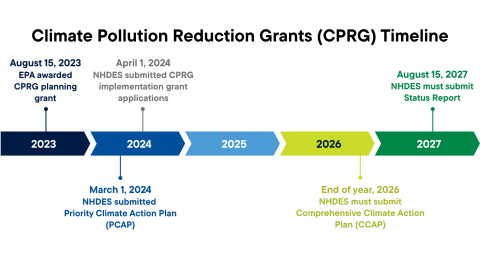
The CCAP provides details of New Hampshire's significant GHG sources, sinks, and sectors; establishes near-term and long-term GHG emission reduction goals; and identifies strategies and measures that would help New Hampshire meet those goals.
New Hampshire's Comprehensive Climate Action Plan is still under development, and updates on this project can be found at the NHDES CCAP webpage. The CCAP will identify opportunities to reduce GHG emissions across seven key economic sectors in New Hampshire: Transportation, Buildings, Electricity Generation & Use, Industry, Agriculture, Natural & Working Lands, and Waste & Materials Management.
The CCAP process relied on extensive stakeholder engagement, facilitated by New Hampshire Listens of the Carsey School of Public Policy at the University of New Hampshire, to identify new opportunities and develop specific goals and outcomes.
As part of this process, New Hampshire Listens designed and facilitated the following activities to inform the development of the CCAP:
- Community and stakeholder engagement activities to understand Granite Staters' perceptions related to CCAP
- Supporting policy research to inform NHDES and key stakeholders
- Statewide surveying
Engagement Process
The CCAP development included the following engagement activities:
- Two Kickoff Events (December 2024): To provide updates on the CCAP development process and introduce the next phase for public and stakeholder engagement opportunities.
- Sector-based Technical Input Session (January to May 2025): To provide a venue for stakeholders to assist in identifying, selecting, and developing potential voluntary GHG reduction measures for the CCAP.
- Specific Stakeholder Update Sessions (Ongoing): To provide updates on the CCAP development process to specific stakeholder groups upon request.
- Local Learning Exchanges (Spring 2026): To understand the state of local and regional climate planning efforts and opportunities to align and support these with the state CCAP.
- Ongoing Public Comments: NHDES accepted feedback from the public throughout the CCAP development process via email.
Technical Input Sessions
The Technical Input Sessions served as a central component of the stakeholder engagement process to inform the New Hampshire CCAP. They provided a structured forum for stakeholders to review and provide input on potential voluntary greenhouse gas (GHG) reduction measures that could be included in the CCAP. Given that NHDES lacks the statutory authority to establish new mandates or additional regulations, the sessions focused on measures that are innovative, nonregulatory, voluntary strategies for reducing GHG emissions that aligned with existing authority to implement and funding opportunities.
Each session included presentations from state agency staff and, in some cases, guest speakers who shared practical insights from relevant projects or program implementation. Five sessions were dedicated to each key GHG-emitting sector, totaling 25 sessions held between January 2025 and May 2025. Each Technical Input Session lasted u to two hours and took place via Zoom.
Read the CCAP Engagement Executive Summary: December 2024 – May 2025
Key Themes: Alternative fuel vehicles, fuel efficiency, public transit, and alternative modes of travel.
"Greenhouse gas emissions from transportation primarily come from burning fossil fuels for cars, trucks, ships, trains, and planes. Over 94% of the fuel used for transportation is petroleum-based, which includes primarily gasoline and diesel and results in direct emissions. The transportation sector is the largest source of direct greenhouse gas emissions and the second largest source when indirect emissions from electricity end-use are allocated across sectors. The transportation sector is an end-use sector for electricity but currently represents a relatively low percentage of total electricity use. Indirect emissions from electricity are less than 1 percent of direct emissions." U.S. EPA
Key Themes: Cleaner HVAC systems and appliances, improved energy efficiency, and renewable energy systems.
"Greenhouse gas emissions from the commercial and residential sector come from fossil fuels burned for heat and the use of gases for refrigeration and cooling in buildings, and non-building-specific emissions such as the handling of waste. The commercial and residential sector emissions increase substantially when indirect emissions from electricity end-use are included, largely because buildings use 75% of the electricity generated in the US (e.g., for heating, ventilation and air conditioning; lighting; appliances, and plug loads)." U.S. EPA
- Summary Report: Commercial & Residential Buildings Technical Input Session 1
- Summary Report: Commercial & Residential Buildings Technical Input Session 2
- Summary Report: Commercial & Residential Buildings Technical Input Session 3
- Summary Report: Commercial & Residential Buildings Technical Input Session 4
- Summary Report: Commercial & Residential Buildings Technical Input Session 5
Key Themes: Electricity generation, transmission, distribution, and storage.
"These gases are released during the combustion of fossil fuels, such as coal, oil, and natural gas, to produce electricity. Carbon dioxide (CO2) makes up the vast majority of greenhouse gas emissions from the sector, but smaller amounts of methane (CH4) and nitrous oxide (N2O) are also emitted. Electric power includes emissions from electricity production used by other end-use sectors (e.g., industry). In 2022, 60% of our [nation's] electricity comes from burning fossil fuels, mostly coal and natural gas." U.S. EPA
- Summary Report: Electrical Generation and Supply Technical Input Session 1
- Summary Report: Electrical Generation and/or Use Technical Input Session 2
- Summary Report: Electrical Generation and/or Use Technical Input Session 3
- Summary Report: Electrical Generation and/or Use Technical Input Session 4
- Summary Report: Electrical Generation and/or Use Technical Input Session 5
Key Themes: Land conservation and restoration, sustainable forestry, and agriculture.
"Greenhouse gas emissions from agriculture come from livestock such as cows, agriculture soils, and rice production. Indirect emissions from electricity use in agricultural activities (e.g., powering buildings and equipment) are about 5 percent of direct emissions. In the United States, since 1990, managed forests and other lands are a net sink, i.e., they have absorbed more CO2 from the atmosphere than they emit, offsetting 13% of total gross greenhouse gas emissions." U.S. EPA
- Summary Report: Agriculture and Natural/Working Lands Technical Input Session 1
- Summary Report: Agriculture and Natural/Working Lands Technical Input Session 2
- Summary Report: Agriculture and Natural/Working Lands Technical Input Session 3
- Summary Report: Agriculture and Natural/Working Lands Technical Input Session 4
- Summary Report: Agriculture and Natural/Working Lands Technical Input Session 5
Key Themes: Manufacturing, recycling, composting, and waste management.
"The industry sector produces the goods and raw materials we use every day... Direct emissions are produced by burning fuel for power or heat, through chemical reactions, and from leaks from industrial processes or equipment."
"When solid waste decomposes in landfills, it creates landfill gas, which is primarily comprised of CO2 and CH4. There are a number of well-established, low-cost methods to reduce greenhouse gases from consumer waste, including recycling programs, waste reduction programs, and landfill methane capture programs." U.S. EPA
- Summary Report: Industry & Waste/Materials Management Technical Input Session 1
- Summary Report: Industry & Waste/Materials Management Technical Input Session 2
- Summary Report: Industry & Waste/Materials Management Technical Input Session 3
- Summary Report: Industry & Waste/Materials Management Technical Input Session 4
- Summary Report: Industry & Waste/Materials Management Technical Input Session 5
Statewide Surveys
As part of the engagement design for NHDES, New Hampshire Listens worked with the UNH Survey Center to survey the public through the Granite State Poll and Granite State Panel. The purpose of this statewide surveying was to better understand New Hampshire's residents' attitudes concerning climate change, air pollution, transportation, their homes, and the environment. A series of five surveys were conducted between January 2024 and July 2026.
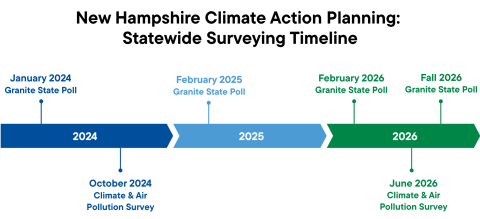
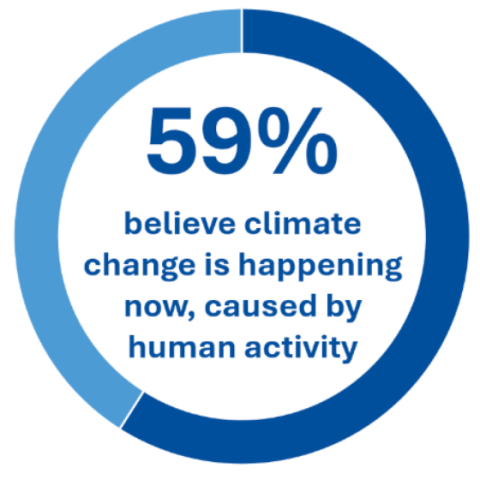
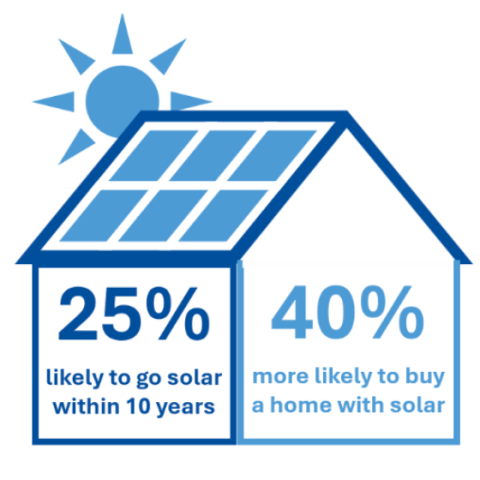

The University of New Hampshire Survey Center included two questions on several iterations of its Granite State Poll for the New Hampshire Department of Environmental Services to better understand New Hampshire residents' feelings about climate change and air pollution. These two questions were also asked in the standalone Climate & Air Pollution Surveys in October 2024 and July 2026.
January 2026
Two thousand, two hundred and thirty-nine (2,239) Granite State Panel members completed the survey online between January 15 and January 19, 2025. The response rate for the January 2026 Granite State Poll was 35%. Read the full summary here.
February 2025
One thousand, four hundred and forty-four (1,444) Granite State Panel members completed the survey online between Friday 13 and February 17, 2025. The response rate for the February 2025 Granite State Poll was 34%. Read the full summary here.
January 2024
1,863 Granite State Panel members completed the survey online between January 4 and January 8, 2024. The margin of sampling error for the survey is ± 2.3 percent. Read the full summary here.
The University of New Hampshire Survey Center conducted two surveys on behalf of the New Hampshire Department of Environmental Services to better understand residents' experiences and attitudes concerning transportation, their homes, and the environment. Invitations were sent to members of the Granite State Panel, a representative group of New Hampshire Residents recruited with probability-based methods.
July 2026
One thousand, one hundred and thirty (1,130) Granite State Panel members completed the survey online between June 25 and June 29. The response rate for this survey was 30%. The margin of sampling error for the survey is ± 2.9 percent.
October 2024
One thousand, two hundred and seventy-eight (1,278) Granite State Panel members completed the survey online between October 3 and October 7. The response rate for this survey was 32%. The margin of sampling error for the survey is +/- 2.7 percent. Read the full summary report here.
Supporting Policy Research
New Hampshire Listens also supported NHDES with background policy research to inform the development of the CCAP. This work included four inventories:
- Existing plans: Climate, energy, and sustainability plans from around New Hampshire and New England to surface measures that could be considered in the CCAP. Read the Greenhouse Gas Emissions Reduction Plans & Measures Analysis
- State legislation: Existing state laws and bills that could enable specific greenhouse gas (GHG) reduction measures, to help identify where there is authority to implement potential GHG reduction measures. Read the GHG-related New Hampshire Legislation Analysis here
- Funding opportunities: Existing sources of funding that programs and projects could tap into to support GHG reduction in New Hampshire. Read the existing Funding Resources Analysis
- Success stories: Examples of GHG reduction programs and projects already happening voluntarily around the state, led by the state, municipal, local, and grassroots entities. Read the existing Greenhouse Gas Emissions Reduction Projects and Program Analysis
The information provided on this site is intended to support meaningful engagement throughout the development of New Hampshire's Comprehensive Climate Action Plan (CCAP). The materials posted here do not necessarily reflect the views and policies of NHDES or any other state agency. The work of NHDES and other participating entities on the CCAP will be focused on completing the elements required by EPA under NHDES' CPRG grant agreement. Learn more about the CPRG process here.
Learn about what people discussed during the priority Climate action plan development in 2023–24.
